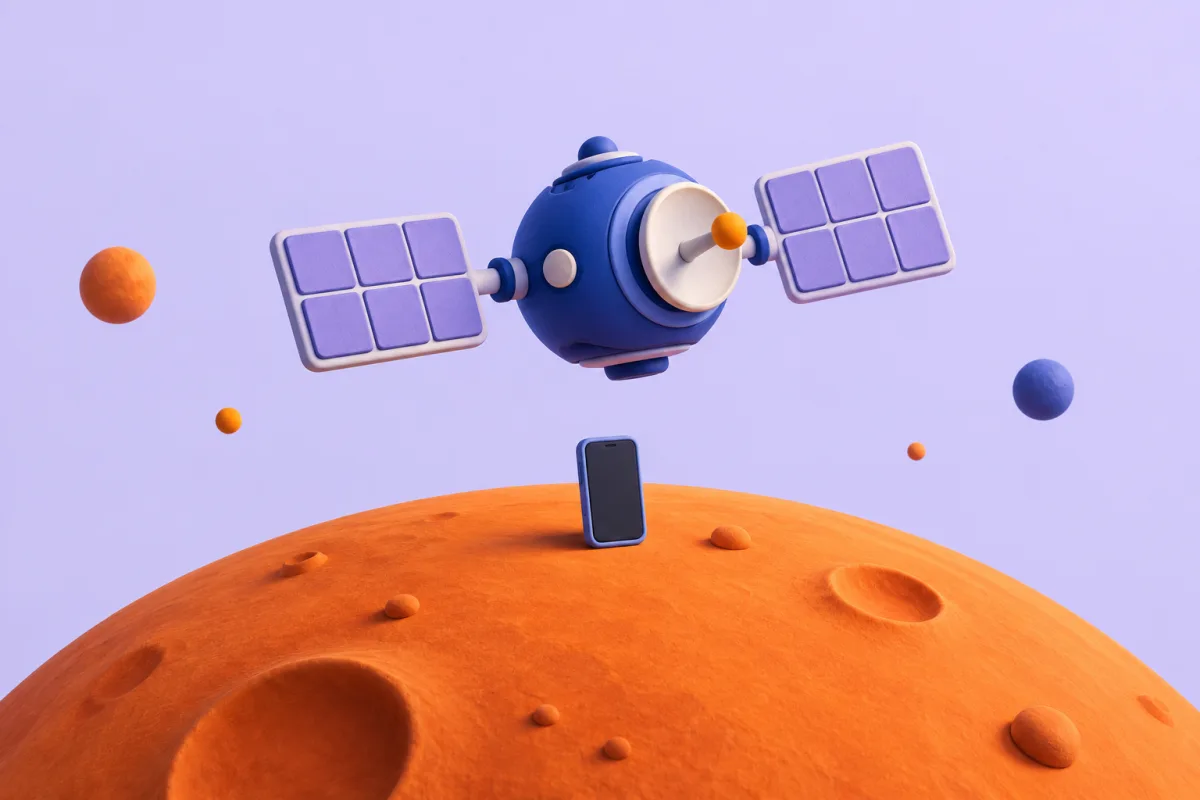
A phone is an impressive little computer until the signal disappears. The map stops loading, the message hangs and an ordinary task becomes a reminder that connectivity has a physical footprint.
Satellite-to-phone services are starting to fill some of those gaps. The appealing idea is simple. Use a compatible phone to reach a satellite when a terrestrial tower is out of range.
Making that work is far less simple. A satellite is moving, it is a long way away and a phone has a tiny antenna compared with a dish on a roof.
Commercial service has arrived
T-Mobile says its T-Satellite service launched in July 2025. That is a useful marker because it moves the discussion beyond a laboratory demonstration.
SpaceX's 2025 progress report says it completed the first generation of its Direct to Cell constellation, launching more than 650 satellites in 18 months. Those are the operator's reported figures, and describe that particular network rather than every satellite-to-phone service.
Availability still depends on the country, carrier, plan, device and supported features. A launch in one market does not establish that a person in New Zealand can use the same service on the same terms. Check the local carrier's current compatibility information before relying on it.
A connection is not a bandwidth guarantee
It is easy to imagine satellite coverage as normal mobile broadband extended everywhere. That expectation gets ahead of what a particular service may support.
A short message has different requirements from a video stream. Shared capacity, the view of the sky and the capabilities of the phone all affect what is practical. Buildings and terrain can still matter. A service being available does not promise a dependable connection in every place or situation.
For app developers, this is another reason to stop treating the network as a binary switch between online and offline. A connection can exist and still be slow, intermittent or unsuitable for a large upload.
Build for the edge of coverage
An app that keeps a local copy of useful information is less stressful when connectivity is weak. A message queue with clear pending and delivered states is more honest than a spinner that disappears before the server has accepted anything.
Small payloads help. So do resumable uploads, deliberate retry behaviour and controls that do not require an immediate round trip for every interaction. These choices improve ordinary mobile use too, including crowded events, rural roads and unreliable Wi-Fi.
Satellite connectivity gives those design decisions a fresh reason to matter. A brief window of signal may be enough to send a useful update if the software handles it well.
The exciting prospect is a phone that remains useful farther from a tower. The responsible product promise is narrower and clearer. Tell people what works, show what has actually been delivered and keep the app useful when the next connection takes a while.
Cover: original AI-generated editorial illustration.